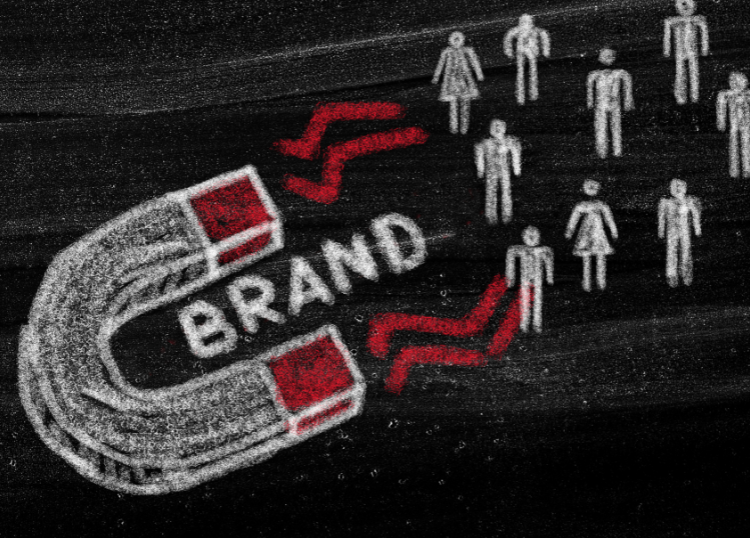
Branding and marketing are often treated as interchangeable terms.
A new logo is described as marketing. An advertising campaign is called branding. Social media, packaging, website design, email campaigns, and promotional materials can easily end up grouped under the same heading.
There is certainly overlap, but branding and marketing serve different purposes.
Branding is concerned with the identity, positioning, personality, and perception of a business. Marketing is concerned with communicating with audiences and encouraging particular actions.
Understanding that distinction makes it easier to decide what a business needs, where resources should be spent, and how different activities should work together.
What Is Branding?
Branding is the process of establishing how a business presents itself and how it wants to be understood.
It includes visual elements, but branding goes much further than a logo.
A brand can include:
- Business name
- Logo
- Colours
- Typography
- Tone of voice
- Messaging
- Positioning
- Values
- Customer experience
- Visual style
Together, these elements create a recognisable identity.
Strong branding helps customers understand what kind of business they are dealing with and what they can reasonably expect from it.
What Is Marketing?
Marketing covers the activities a business uses to reach audiences, communicate its products or services, generate demand, and encourage customer action.
Marketing can include:
- Search engine marketing
- Content marketing
- Social media
- Email campaigns
- Paid advertising
- SEO
- Events
- Direct marketing
- Public relations
- Promotions
Different businesses require different combinations of these activities.
A local professional service may depend heavily on search and referrals, while an online retailer may invest more heavily in paid advertising, email, social media, and product content.
Branding Defines the Business
One useful way to understand the difference is to think of branding as defining the business.
It answers questions such as:
- Who are we?
- Who do we serve?
- What do we stand for?
- How should we sound?
- How should we look?
- How are we different?
- What should customers associate with us?
These questions provide direction for how the business presents itself.
Without clear answers, marketing can become inconsistent because every campaign starts from a different interpretation of the company.
Marketing Communicates the Business
Marketing takes that identity and puts it in front of relevant audiences.
It answers questions such as:
- Who should we reach?
- Where can we reach them?
- What should we communicate?
- Which channels should we use?
- What action do we want people to take?
- How will we measure the response?
Marketing therefore turns business and brand strategy into communication and activity.
Branding Isn't Just a Logo
One of the most persistent misunderstandings about branding is that it means designing a logo.
A logo is part of a visual identity, and visual identity is part of branding.
But a business with an attractive logo can still have a weak brand.
If its website sounds completely different from its sales team, its social media uses inconsistent messaging, its customer service contradicts its stated values, and nobody can explain what differentiates it, changing the logo won't solve the underlying problem.
Branding needs to extend beyond visual appearance.
Marketing Isn't Just Advertising
Marketing is also frequently reduced to one of its components.
Advertising is a marketing activity, but it isn't the entire discipline.
Marketing can involve understanding:
- Customer needs
- Audience segments
- Competitors
- Pricing
- Distribution
- Positioning
- Communication channels
- Customer behaviour
An advertising campaign is one way of putting a marketing strategy into action.
Running advertisements without understanding the audience, offer, or positioning can simply mean paying to communicate an unclear message to more people.
Branding Is Usually More Consistent Over Time
Marketing campaigns change regularly.
A business might run one campaign this month and a completely different campaign next quarter.
The audience, message, offer, platform, creative execution, and objective can all change.
Branding generally provides more continuity.
Logos, colours, positioning, tone, and core messaging may develop over time, but they usually shouldn't change with every campaign.
This consistency helps people recognise the business across different interactions.
Marketing Responds More Quickly to Changing Conditions
Marketing often needs to react to immediate circumstances.
A business may adjust its activity because of:
- Seasonal demand
- New products
- Competitor activity
- Customer behaviour
- Market conditions
- Platform changes
- Campaign performance
A retailer might promote winter products one month and summer products several months later.
The marketing changes, but the underlying brand should still feel recognisable.
Branding Influences Perception
A business cannot completely control what people think about it.
Customers form opinions through every interaction they have with the company.
Branding can, however, influence that perception by creating greater consistency between what the business says and what customers experience.
That includes:
- Visual presentation
- Written communication
- Customer service
- Product quality
- Packaging
- Physical environments
- Digital experiences
Brand perception is therefore created by more than marketing materials.
Marketing Encourages Action
Marketing usually has a more immediate behavioural objective.
Depending on the campaign, that action could be:
- Visiting a website
- Requesting a quote
- Buying a product
- Booking an appointment
- Registering for an event
- Downloading information
- Joining a mailing list
Marketing activity should normally have a clear purpose.
If a business cannot explain what a campaign is intended to achieve, measuring whether it worked becomes difficult.
Brand Strategy Comes Before Visual Design
Before deciding on colours, fonts, photography, and logos, it helps to establish the strategic foundations of the brand.
These may include:
- Target audience
- Positioning
- Brand personality
- Key messages
- Value proposition
- Competitive context
Visual identity can then express those decisions.
Starting with design before understanding the business can result in an attractive identity that doesn't communicate anything particularly relevant.
Marketing Strategy Determines How You Reach People
A marketing strategy considers how the business will connect with its target audiences and support commercial objectives.
It may address:
- Target markets
- Customer personas
- Marketing channels
- Content
- Budget
- Campaign priorities
- Lead generation
- Customer retention
- Measurement
The marketing strategy should align with the wider business and brand strategy.
Otherwise, the business may end up attracting audiences that aren't a good fit.
Tone of Voice Connects Branding and Marketing
Tone of voice is a good example of where branding and marketing overlap.
The brand defines how the business should sound.
Marketing applies that voice across communication channels.
For example, a brand might be:
- Professional but approachable
- Technical but clear
- Informal and playful
- Calm and reassuring
Those characteristics should influence website copy, advertisements, emails, social posts, brochures, and other communications.
The wording will change according to the channel, but the personality should remain recognisable.
Your Website Does Both
A business website sits at the intersection of branding and marketing.
Its branding elements may include:
- Logo
- Colour palette
- Typography
- Photography
- Tone
- Messaging
Its marketing functions may include:
- Service pages
- Landing pages
- Blog content
- Calls to action
- Lead forms
- SEO content
- Promotional offers
A website therefore needs to look and sound consistent with the brand while also helping visitors find information and take appropriate action.
Social Media Also Combines Both
Social media can support brand recognition while also serving specific marketing objectives.
Branding influences:
- Visual consistency
- Tone
- Subject matter
- Personality
Marketing determines:
- Campaign objectives
- Audience targeting
- Posting strategy
- Paid promotion
- Calls to action
- Measurement
Posting attractive branded graphics without a clear purpose isn't necessarily effective marketing.
Equally, constantly posting sales messages without a consistent identity can make the business difficult to remember.
Content Marketing Depends on Brand Clarity
Blog articles, videos, guides, and other content need a consistent point of view and communication style.
Brand guidelines can help determine:
- How technical the content should be
- How formal the language should sound
- Which topics fit the business
- How products or services are discussed
- Which audience the content addresses
This becomes particularly important when several employees, freelancers, or agencies produce content for the same organisation.
SEO Is Marketing, but Branding Still Matters
SEO is primarily a marketing discipline concerned with helping relevant pages appear in search results and attract organic traffic.
However, branding influences what happens when searchers encounter the business.
Someone may see several companies appearing for the same search.
Recognition, reputation, messaging, reviews, and previous interactions can influence which result they choose.
Search visibility gets a business into consideration. Brand familiarity can influence what happens next.
Paid Advertising Can Expose Weak Branding
Paid advertising can quickly place a business in front of a large audience.
That doesn't mean the audience will respond positively.
If the advertisement communicates one message but the landing page looks and sounds unrelated, users may become uncertain.
Similarly, a strong advertising offer may attract clicks but fail to convert when the wider brand doesn't provide sufficient confidence.
Advertising can generate attention. It cannot automatically compensate for unclear positioning or an inconsistent customer experience.
Branding Can Make Marketing More Consistent
Without clear branding, every new campaign can become a debate.
Which colours should we use?
How should the copy sound?
What message should we lead with?
What type of photography is appropriate?
Who exactly are we speaking to?
A well-defined brand provides answers to many of these questions before campaign work begins.
That can make marketing production more consistent across teams, suppliers, and channels.
Marketing Provides Useful Feedback for Branding
The relationship also works in the opposite direction.
Marketing activity produces information about how audiences respond.
Search data, campaign performance, customer feedback, sales conversations, and website behaviour can reveal whether brand assumptions match reality.
For example, a business may believe customers value one particular benefit while marketing data repeatedly shows that another issue drives enquiries.
That information can influence future messaging and positioning decisions.
Branding and Marketing Use Different Measures
Branding can be more difficult to measure directly because its effects often develop over longer periods.
Relevant indicators might include:
- Brand awareness
- Recognition
- Customer perception
- Direct website traffic
- Branded searches
- Customer loyalty
Marketing campaigns often use more immediate performance measures, such as:
- Website traffic
- Leads
- Conversion rate
- Cost per lead
- Sales
- Return on advertising spend
The appropriate metrics depend on the objective.
Not every branding activity should be judged according to immediate sales, just as marketing shouldn't be assessed solely on whether something looks visually impressive.
A Strong Brand Doesn't Replace Marketing
A business can have excellent branding and still struggle if too few potential customers know it exists.
A clear identity, strong positioning, and consistent customer experience provide a valuable foundation, but the business still needs ways to reach relevant audiences.
Marketing provides those routes.
Depending on the business, that might involve search, social media, advertising, partnerships, events, email, content, or other channels.
Strong Marketing Doesn't Replace Branding Either
The reverse is equally important.
A business can spend heavily on marketing and generate substantial visibility without establishing a memorable identity.
Campaigns may produce short-term leads while doing little to build recognition or long-term preference.
If every campaign looks, sounds, and feels different, customers may not connect those interactions with the same company.
Marketing can create repeated exposure. Branding helps make that exposure recognisable.
Which Should a New Business Work on First?
New businesses generally need both, but branding usually needs enough definition to give marketing clear direction.
Before launching major campaigns, establish the basics:
- Target audience
- Positioning
- Core messaging
- Visual identity
- Tone of voice
This doesn't mean spending months perfecting every possible brand guideline before speaking to customers.
The objective is to create enough consistency that marketing activities feel as though they come from the same business.
When Might a Business Need to Revisit Its Branding?
Branding may need attention when:
- The business has changed significantly
- The target market has shifted
- Different materials look unrelated
- Messaging is inconsistent
- Customers misunderstand the offering
- The existing identity no longer reflects the organisation
A rebrand shouldn't be undertaken simply because someone is tired of the current logo.
There should be a clear business reason for changing an established identity.
When Might Marketing Need More Attention?
A business may have reasonably strong branding but still face marketing problems.
Warning signs might include:
- Low website traffic
- Few qualified enquiries
- Poor campaign performance
- Limited search visibility
- Weak customer retention
- Inconsistent lead generation
In this situation, changing the logo is unlikely to address the underlying issue.
The business may need to review its channels, targeting, content, offers, website performance, or broader marketing strategy.
How Branding and Marketing Work Together
Consider a new independent hotel.
Its branding might define:
- Positioning
- Name
- Visual identity
- Photography style
- Tone of voice
- Guest experience
- Key messages
Its marketing might include:
- Search campaigns
- SEO
- Travel partnerships
- Email campaigns
- Social media
- Seasonal offers
- Content
The marketing attracts attention and encourages bookings.
The branding helps ensure that everything from the advertisement to the website and the eventual guest experience feels connected.
Neither works as effectively in isolation.
Final Thoughts
The difference between branding and marketing is largely about the role each one plays.
Branding defines how a business presents itself, what it represents, how it communicates, and how it wants to be perceived.
Marketing takes that foundation and uses channels, campaigns, content, and communication to reach audiences and encourage action.
Businesses need both.
Branding without marketing can leave a well-defined business largely unnoticed. Marketing without clear branding can generate attention without building consistent recognition.
When the two work together, customers encounter the same underlying identity whether they find the business through a search result, advertisement, social post, website, email, or real-world interaction.
That consistency is what turns separate marketing activities into communication from a recognisable brand.